
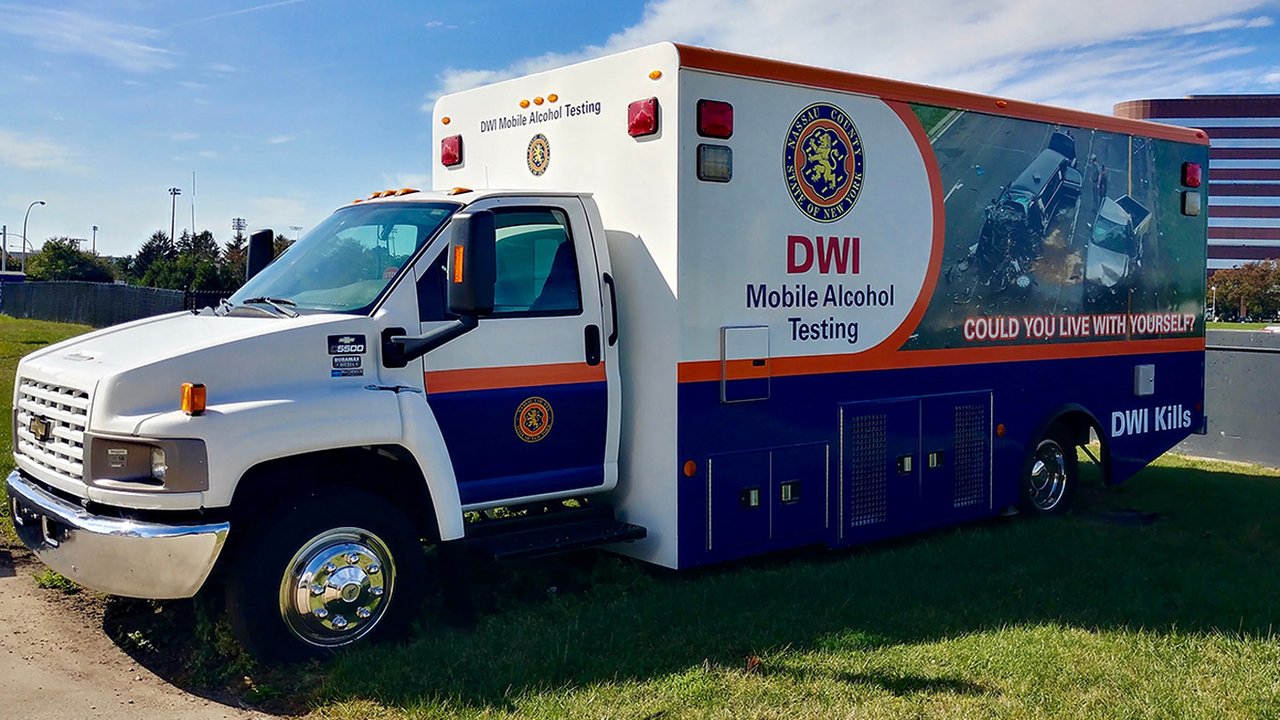
New York DWI & DWAI Laws
New York is unusual among U.S. states in that it has three distinct impaired-driving charges, not two. A driver under the influence of alcohol or drugs in New York can be charged with DWI (the standard 0.08% offense), DWAI (a lower-tier alcohol charge between 0.05% and 0.07%), or DWAI-Drugs / DWAI-Combination (drug or mixed impairment). Each carries its own penalties — and each comes with the parallel DMV administrative process.
The three categories
- DWI — Driving While Intoxicated. BAC at or above 0.08% (0.04% for commercial drivers). The headline offense.
- DWAI — Driving While Ability Impaired by Alcohol. BAC of 0.05% to 0.07%, or evidence of impairment with any measurable BAC. A traffic infraction on a first offense, not a misdemeanor.
- DWAI-Drugs / DWAI-Combination. Impairment by a controlled substance or by a drug-and-alcohol mixture, with no specific BAC threshold.
- Aggravated DWI. BAC at or above 0.18%, or any DWI with a child under 16 in the vehicle (Leandra's Law).
- Zero Tolerance. Drivers under 21 with a BAC of 0.02%-0.07% face a separate civil penalty under VTL §1192-a.
First-offense DWI penalties
- Misdemeanor conviction.
- Fine of $500-$1,000 plus state surcharges (typically $400 in addition).
- Up to one year in county jail (rarely imposed on first offense without aggravating factors).
- Six-month license revocation (not a suspension — reapplication required).
- Three-year Driver Responsibility Assessment of $250/year.
- Mandatory installation of an ignition interlock device on every vehicle the driver owns or operates, for at least 12 months.
- Likely participation in the Impaired Driver Program (IDP) and the Victim Impact Panel.
- An SR-22-equivalent New York FS-1 insurance filing for three years — see New York insurance.
First-offense DWAI penalties
A first DWAI is a traffic infraction, not a misdemeanor — an important distinction for employment and immigration purposes:
- Fine of $300-$500 plus surcharges.
- Up to 15 days in jail (almost never imposed).
- 90-day license suspension.
- Three-year Driver Responsibility Assessment of $250/year.
- No mandatory IID, but the court can order one in aggravated cases.
Many first-time DWI arrests resolve as a DWAI plea once the BAC is right at or near the 0.08% line.
Aggravated DWI / Leandra's Law
Aggravated DWI applies when the BAC is 0.18% or higher, or when a child age 15 or younger is in the vehicle (this version is known as Leandra's Law, named for an 11-year-old killed by a drunk driver in 2009). Leandra's Law cases are charged as felonies on first offense, with maximum prison terms of four years and mandatory ignition-interlock installation. A child fatality during a DWI is charged as Vehicular Homicide.
Implied consent and chemical-test refusal
Every New York driver consents to chemical testing as a condition of holding a license. Refusing a breath, blood, or urine test on arrest triggers:
- A one-year license revocation, even if the underlying DWI charge is dismissed.
- A separate $500 civil penalty.
- Three years of Driver Responsibility Assessment at $250/year.
- Use of the refusal as evidence of consciousness of guilt at trial.
The 15-day temporary license
After a DWI arrest, the police seize the driver's license and issue a temporary 15-day notice. After 15 days, the suspension is automatic unless the driver requests a DMV hearing. The hearing examines four narrow questions: lawful stop, lawful arrest, refusal or BAC level, and the officer's notification of the chemical-test consequence. Winning the hearing prevents the administrative suspension but does not affect the criminal case.
Ignition interlock
Since 2010, every DWI sentence in New York includes mandatory ignition-interlock installation on every vehicle the driver owns or routinely operates, for at least 12 months. The driver pays for the device (about $100-$130 per month plus a $100 install fee). Failed rolling tests extend the IID period and can be used as evidence in any subsequent prosecution.
Repeat offenses
A second DWI within 10 years is charged as a Class E felony, with a one-year minimum revocation, mandatory 18-month IID, and the possibility of state prison. A third DWI within 10 years is a Class D felony with up to seven years of prison. New York counts every "alcohol-related" prior, including out-of-state convictions, against the 10-year window.