
Decoding a Vehicle Identification Number (VIN)
Every vehicle manufactured for sale in the United States since 1981 carries a unique 17-character Vehicle Identification Number — a VIN — that encodes who built the car, where, when, and exactly what it is. Decoding the VIN takes about 30 seconds with the right reference, and it's one of the fastest ways to verify that a used-car listing matches the vehicle in front of you.
Where to find the VIN
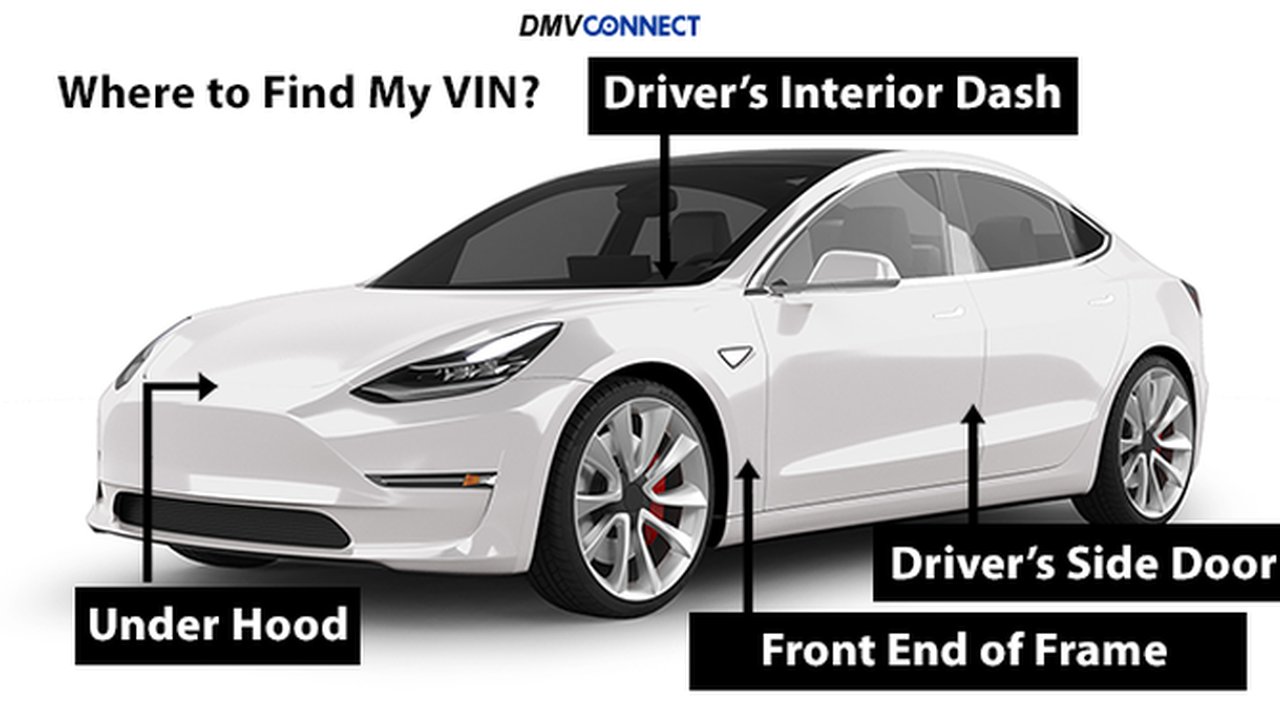
Modern U.S. vehicles display the VIN in three or more locations:
- At the base of the windshield on the driver's side, visible from outside the car.
- On a sticker on the driver's-door jamb (often with the same number plus tire-pressure and weight info).
- On the engine block (stamped or laser-etched, often hard to see).
- On the vehicle title, registration card, and insurance documents.
If those numbers don't match, walk away. A mismatch is one of the strongest indicators of a stolen or salvaged vehicle that's been re-VIN'd.
What each character means
VINs are read left to right in groups:
- Position 1-3 (World Manufacturer Identifier, WMI). The first character indicates the country of origin (1, 4, 5 = USA; 2 = Canada; 3 = Mexico; J = Japan; K = South Korea; W = Germany; etc.). The next two characters identify the manufacturer.
- Position 4-8 (Vehicle Descriptor Section, VDS). Manufacturer-specific codes describing the body style, engine type, restraint system, and trim level. Each manufacturer publishes its own decoder for these positions.
- Position 9 (Check digit). A mathematical check derived from the other 16 characters. If the check digit doesn't match the calculation, the VIN is fake or transcribed incorrectly.
- Position 10 (Model year). A single character: A=1980, B=1981 ... Y=2000, then 1=2001 ... 9=2009, then A=2010, B=2011 ... again. The letters I, O, Q, U, and Z are skipped, as is the digit 0 in the year position.
- Position 11 (Plant code). The factory where the vehicle was assembled.
- Position 12-17 (Serial number). The unique production sequence number.
Spotting fake or altered VINs
Three things to check:
- Calculate the check digit. If position 9 doesn't match the expected value from the algorithm, the VIN is invalid. (The algorithm is published by NHTSA; many free online tools will calculate it for you.)
- Compare locations. The dashboard VIN, the door-jamb VIN, and the title VIN must all match exactly. Mismatches are signs of theft, salvage with replacement parts, or fraudulent retitling.
- Check the federal database. The free NHTSA VIN lookup at vpic.nhtsa.dot.gov will return the manufacturer's specifications for any valid VIN. If the database says "2018 Honda Accord LX" and the seller is calling it a 2018 Sport, you've spotted a discrepancy.
What a VIN decoder doesn't tell you
The VIN itself encodes the factory specifications, not the history. To learn about prior accidents, ownership transfers, or odometer rollbacks, you need a vehicle history report. The VIN is the input; the history report is the output. The two together — a VIN that decodes correctly and a history that's clean — is the minimum due diligence for any used-car purchase.
Pre-1981 vehicles
VINs before 1981 weren't standardized at 17 characters. Vehicles built between 1954 and 1981 typically have shorter VINs (sometimes as few as 11 characters), and the encoding scheme varied by manufacturer and year. Most of the rules above don't apply to those vehicles. For older classics, consult the manufacturer's archives or specialist clubs.
Worldwide VIN format
The 17-character VIN format used in the U.S. is also used in Canada, Mexico, the European Union, China, Japan, South Korea, Australia, and most other major automotive markets. The first character changes by region, but the structure is otherwise consistent — meaning a VIN decoder built for U.S. cars will work on imports too.